

Why This Trip?
Two days. That’s what you get, and honestly, that’s enough if you do it right. This weekend is for travellers who want the real thing without the filler: hands-on workshops, artisan souks and museum-grade collections, compressed into 48 efficient hours. The problem it solves is choice paralysis. Morocco’s craft heritage is vast, and most visitors waste a day wandering the medina without context, ending up buying a lamp they could have found in a Marrakech airport shop. Here you get a curated, fast-paced route through the living traditions of zellige tilework, hand-knotted rugs, brass and leather in one city, with time to actually meet the makers. I still remember the grit of wet clay under my fingernails after a morning at a pottery wheel near Bab Boujloud, and the way a brass beater in Place Seffarine paused mid-hammer to hand me his tools and let me try. It is emotional, tactile and deeply memorable. You leave with something you made, not just something you bought.
About Fes
Fes is Morocco’s spiritual and intellectual capital, founded in 789 by Idris I and later expanded by his son Idris II on the opposite bank of the Oued Fes. The city’s medina, Fes el-Bali, is a UNESCO World Heritage site and one of the largest car-free urban areas on earth, a maze of thousands of lanes where a donkey carrying gas canisters has right of way over you. It reached its golden age under the Marinids in the 13th and 14th centuries, when it became a centre of learning, theology and trade. The University of al-Qarawiyyin, founded in 859 by Fatima al-Fihri, is often cited as the world’s oldest continuously operating university. Fes is also the cradle of Moroccan craft: the tanneries of Chouara, the zellige workshops, the brass beaters of Place Seffarine and the weavers of the surrounding hills all still work by hand. The medina’s fondouks, historic merchant inns, once housed travelling artisans and their goods, and many still stand as workshops today. Step into one and the smell of cedar shavings and dye hits you before your eyes adjust to the dark.
Your 2 days Itinerary
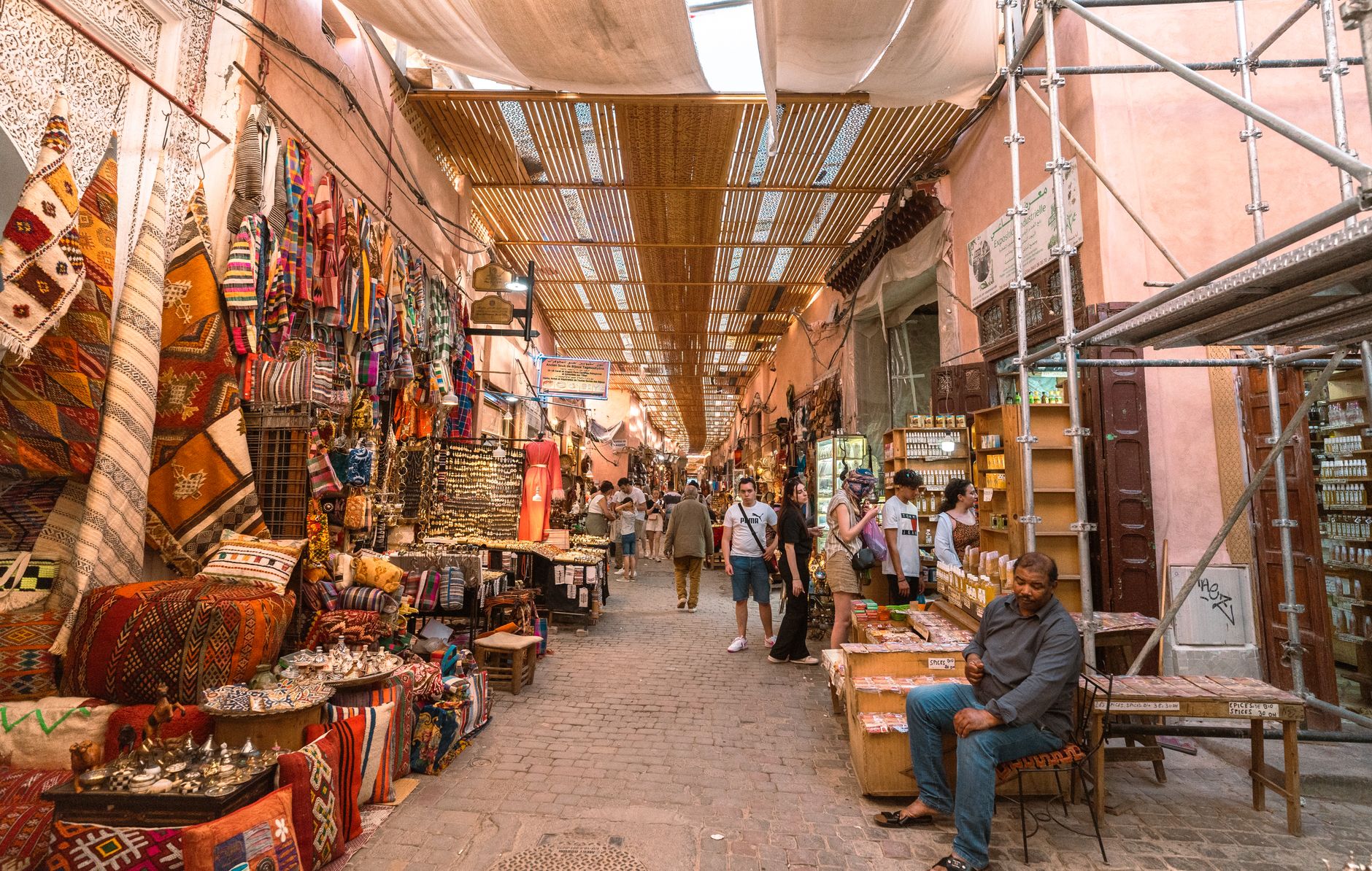
Day 1 — Medina craft immersion. Start early at Bab Boujloud and walk the craft route through Fes el-Bali: the Chouara tanneries from the terrace viewpoints (hold the mint sprig they hand you — you’ll need it), the copper workshops of Place Seffarine and a zellige or pottery studio where you can shape or glaze a piece yourself. Break for lunch in a medina riad, then spend the afternoon in the Belghazi Museum or the Nejjarine Museum of Wooden Arts and Crafts, both housed in restored fondouks, before a sunset rooftop view over the minarets. I watched the call to prayer roll across those rooftops like a wave — one minaret, then another, then another.
Day 2 — Textiles and markets. Morning in the carpet and textile souks with a guide who can explain knot counts, natural dyes and regional styles, plus a short weaving demonstration. After lunch, visit a leather or brass atelier for a hands-on session, then finish at the souk el-Attarine for spices and small crafts. The smell of cumin and dried rose there stays with you. If time allows, a quick stop at the Bou Inania Madrasa for its carved cedar and stucco work closes the loop. Trains to Marrakech or Casablanca leave in the evening.
Where to Stay
Stay inside or just at the edge of the medina to keep walking distances short. Prices swing with season, so treat these as honest starting ranges.
| Option | Area | Vibe | Price per night (MAD & EUR) |
|---|---|---|---|
| Traditional riad | Fes el-Bali medina | Courtyard, tilework, rooftop breakfast | from 400-800 MAD (~EUR 35-70) |
| Mid-range riad | Near Bab Boujloud | Restored fondouk, easy medina access | from 700-1,200 MAD (~EUR 65-110) |
| Boutique guesthouse | Ville Nouvelle | Quiet, modern, taxi into the medina | from 600-1,000 MAD (~EUR 55-90) |
| Budget hostel or dar | Medina fringe | Simple, social, walkable | from 150-350 MAD (~EUR 15-30) |
Getting There & Around
Fes is well connected by rail and road, and the medina itself is best explored on foot. Use a licensed guide for the first medina day to save hours of wrong turns — I once spent forty minutes circling the same fountain because every alley looked identical.
| Route | Best option | Duration | Approx cost (MAD) |
|---|---|---|---|
| Casablanca to Fes | Train (ONCF) | 3.5-4 hours | 120-200 |
| Marrakech to Fes | Train (ONCF) | 7-8 hours | 200-350 |
| Rabat to Fes | Train (ONCF) | 2.5-3 hours | 90-150 |
| Medina to sights | Walk or petit taxi | 10-25 min | 10-30 |
Budget Estimate
Figures are per person for two days, assuming shared costs for a couple and a mix of street food and one sit-down meal daily. Here’s how I’d think about it: book your riad early and you’ll land near the low end, leaving room for a workshop or two that you’ll actually remember. Skip the fancy dinner and eat where the taxi drivers eat — a plate of harira and a msemen for under 30 MAD beats most hotel restaurants. Carry small cash for tips; a few dirhams to the artisan who shows you his loom goes a long way.
| Item | Solo (MAD / EUR) | Couple per person (MAD / EUR) |
|---|---|---|
| Accommodation | 400-900 / ~35-80 | 350-750 / ~30-65 |
| Food & drink | 250-450 / ~22-40 | 220-400 / ~20-35 |
| Getting around | 80-150 / ~7-13 | 60-120 / ~5-11 |
| Activities & tours | 300-600 / ~26-53 | 300-600 / ~26-53 |
| Total | 1,030-2,100 / ~90-186 | 930-1,870 / ~81-166 |
Book Your Stay on MoroccanChapter
Your moroccan craft art stay weekend deserves a base that matches the pace: a riad with a courtyard to recover in and a rooftop to watch the medina wake up. On moroccanchapter.com you can compare hand-picked riads, dars and guesthouses in Fes and Marrakech, read honest notes on location and character, and book directly with confidence. Whether you are chasing zellige, textiles or the perfect rooftop breakfast, the right stay turns two efficient days into a trip you will talk about for years. Start planning your moroccan craft art stay weekend today and let the makers do the rest.