

Why This Trip?
You’ve got a weekend and a serious appetite. That’s all you need. A Casablanca street food tour weekend strips away the guidebook fluff and goes straight for the good stuff: grilled sardines by the port, steaming bowls of harira, msemen folded hot off the griddle, and mint tea poured from a height. I still remember my first sfenj in the old medina — pulled from the oil with a pair of battered tongs, dusted with sugar, gone in three bites while I dodged a delivery cart in a lane barely wide enough for one person. It suits curious, fast-moving travelers who would rather eat where locals eat than sit in a tourist restaurant with a laminated menu. Two days, zero filler, maximum flavor — this is Casablanca at street level.
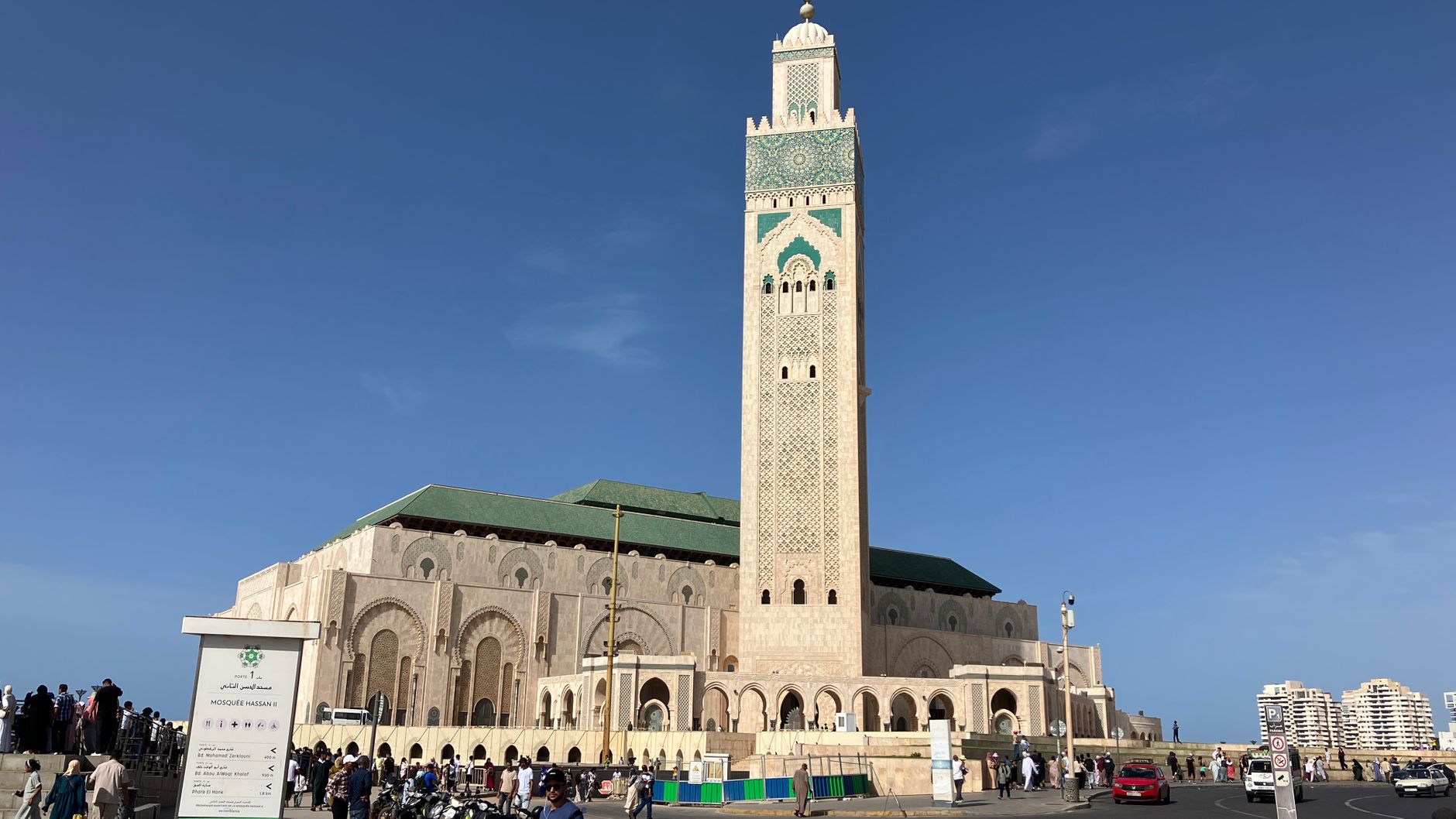
About Casablanca
Casablanca is Morocco’s economic capital and largest city, home to roughly 3.5 million people in the wider metropolitan area, sitting on the Atlantic coast about 80 kilometers south of Rabat. Unlike the imperial cities of Fez, Marrakech, or Meknes, Casablanca’s identity was forged in the 20th century. The French Protectorate, established in 1912, turned a modest coastal port into a modern metropolis, and architects like Henri Prost and Michel Écochard laid out wide boulevards and the striking Mauresque style that blends Art Deco with Moroccan ornament.
The city’s beating heart is the old medina and the Habous quarter, a 1920s planned district near the royal palace that feels like a living postcard of arched arcades and whitewashed alleys. Just south, the colossal Hassan II Mosque — completed in 1993 — juts over the Atlantic with the world’s tallest minaret at 210 meters. Casablanca is also the kingdom’s food capital in a quiet way: its port lands more fish than anywhere else in Morocco, and its bakeries and street stalls serve the country’s most diverse, no-nonsense everyday cooking. The smell of cumin and grilled mackerel hits you before you even see the stalls.
Your 2 days Itinerary
Day 1 — Old Medina and the Port. Start mid-morning at the Marché Central, where fishmongers grill your pick on the spot — point at a sardine, pay by weight, and ten minutes later it’s on a paper plate with lemon and cumin. Then wander the narrow lanes of the old medina for msemen and freshly fried sfenj. Late afternoon, walk the Corniche toward Ain Diab for grilled sardines and mint tea as the sun drops over the Atlantic. I watched the sky turn tangerine behind the mosque’s minaret one evening and forgot, briefly, that I was in a city of millions.
Day 2 — Habous and the Coast. Morning in the Habous quarter: pastries at a traditional mahlaba, then a stop at the olive and spice stalls where the vendor will insist you taste three varieties before you buy. After lunch, head to the Hassan II Mosque esplanade for the sea views, and close the day with a bowl of harira and a plate of tangia in a working-class neighborhood near the old medina. Ask a local where they’d eat — that’s always the right answer.
Where to Stay
Pick your base by how much walking you want between meals. The old medina and Habous put you inside the food action; the Corniche trades that for ocean air and easier parking.
| Option | Area | Vibe | Price per night (MAD & EUR) |
|---|---|---|---|
| Budget guesthouse or hostel | Old medina | Simple, central, walkable to stalls | from 250-450 MAD (~EUR 22-40) |
| Mid-range riad or hotel | Habous / city center | Comfortable, quiet, close to markets | from 400-800 MAD (~EUR 35-70) |
| Boutique hotel | Corniche / Ain Diab | Sea views, relaxed, good for couples | from 900-1,600 MAD (~EUR 80-145) |
| Upscale international hotel | City center / Anfa | Polished, business-friendly, easy transit | from 1,500-2,500 MAD (~EUR 135-225) |
Getting There & Around
Casablanca is the country’s rail hub, so most travelers arrive by train from Marrakech, Rabat, or Fez. Once in town, the tram and petit taxis cover the food zones cheaply — just agree the fare or insist on the meter before you set off. I learned that one the hard way after a driver quoted me triple the going rate from the medina to Ain Diab. Now I always ask first, and I’ve never had a problem since.
| Route | Best option | Duration | Approx cost (MAD) |
|---|---|---|---|
| Marrakech to Casablanca | ONCF train | 2h 40m-3h 30m | 90-150 |
| Rabat to Casablanca | ONCF train | 50-60 min | 35-70 |
| Fez to Casablanca | ONCF train | 4-5 hours | 140-220 |
| Within the city | Tram or petit taxi | 10-30 min per hop | 6-30 |
Budget Estimate
Here’s the honest truth: street food is the great equalizer in Casablanca. You can eat superbly for very little, and the biggest variable is your bed. A plate of sardines costs less than a coffee back home. These are honest per-person ranges for two days, assuming you eat mostly on the street and use taxis and trams. If you’re on a tight budget, aim for the lower end and you’ll still eat like a king.
| Item | Solo (MAD / EUR) | Couple per person (MAD / EUR) |
|---|---|---|
| Accommodation | 500-1,600 MAD / ~EUR 45-145 | 400-1,200 MAD / ~EUR 35-110 |
| Food & drink | 250-500 MAD / ~EUR 22-45 | 220-450 MAD / ~EUR 20-40 |
| Getting around | 80-200 MAD / ~EUR 7-18 | 60-150 MAD / ~EUR 5-14 |
| Activities & tours | 150-400 MAD / ~EUR 14-36 | 150-400 MAD / ~EUR 14-36 |
| Total | 980-2,700 MAD / ~EUR 88-243 | 830-2,200 MAD / ~EUR 75-198 |
Book Your Stay on MoroccanChapter
Ready to eat your way through the city? A Casablanca street food tour weekend works best when your bed is close to the action, and that is exactly where moroccanchapter.com comes in. Browse handpicked stays across the old medina, Habous, and the Corniche, compare honest prices, and lock in a place that puts you steps from the grills, bakeries, and tea stalls. Two days, one appetite, and a base that makes every meal easy to reach — start planning your Casablanca food weekend on moroccanchapter.com today.