

Why This Trip?
You’ve done Marrakech and Fes. You’ve photographed the blue walls of Chefchaouen. Now you want the Morocco that doesn’t perform for anyone. The Souss-Massa region, squeezed between the High Atlas and the Atlantic, is that Morocco — a place of wetland estuaries loud with flamingos at dawn, argan forests where goats climb trees (yes, really), and cliff ledges holding the last wild northern bald ibises on the planet. Twelve days here means slowing to the pace of the tide: birdwatching before breakfast, sharing couscous with Amazigh families, eating grilled sardines at a harbour where the boats still come in at noon. I first came for the ibises and stayed three extra days because I couldn’t bring myself to leave the Oued Massa at sunrise. This itinerary solves the problem of the rushed coastal tour that skims the surface. You go deep instead. And you come home different.
About Souss-Massa National Park
Established in 1991, Souss-Massa National Park hugs roughly 65 kilometres of Atlantic coastline south of Agadir, covering about 33,800 hectares of dunes, estuaries, cliffs and scrubland. It exists chiefly for one bird: the northern bald ibis, a glossy black creature with a bare red face and a punk crest that nests on coastal cliffs. Only a few hundred breeding pairs survive worldwide, and most of them are right here. Stand at the cliff viewpoint near Tifnit at first light and you’ll hear them before you see them — a low, croaking chatter carrying over the surf. The park also shelters dorcas gazelles, honey badgers, and thousands of migratory flamingos and waders that pause in the Oued Massa and Oued Souss estuaries. Local Amazigh communities fish and farm around its edges, and the park runs education and ecotourism programmes with them rather than around them. Spring and autumn bring the richest birdlife. Winters are mild, quiet, and honestly underrated.
Your 12 days Itinerary
Day 1: Land in Agadir, settle in, and walk the corniche in the evening. The Atlantic smell — salt, diesel, grilled fish — tells you you’ve arrived.
Day 2: Drive south to the Oued Massa estuary. Morning birdwatching with a local guide who knows every reed bed by name, then the Massa archaeological site and a nearby argan cooperative where the oil is still pressed by hand.
Day 3: Full day in the national park: cliff viewpoints for bald ibis, the Tifnit fishing village, and a picnic on the dunes with the wind at your back.
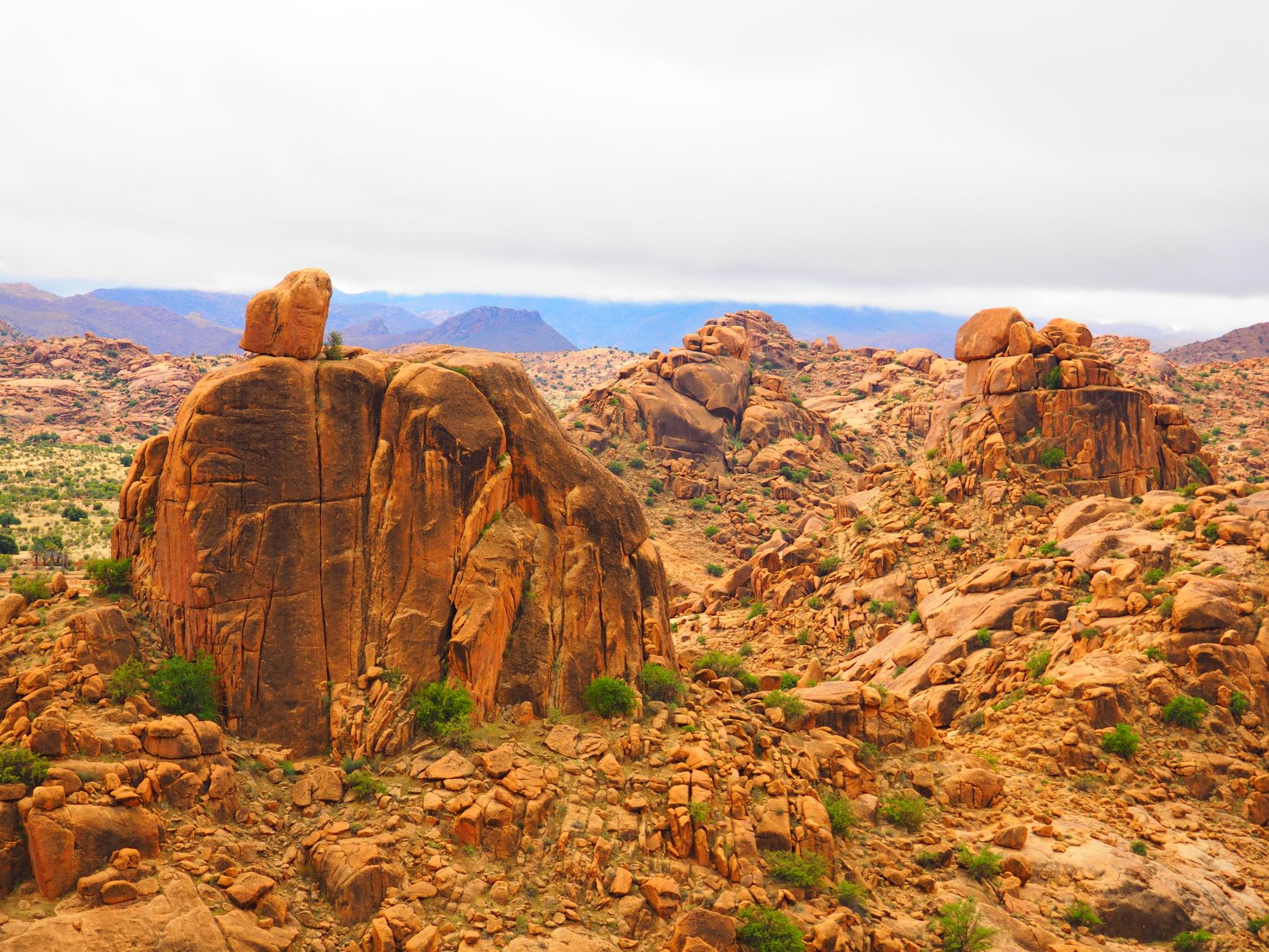
Day 4: Head inland to Tiznit, the walled silver town. Wander the medina and walk the ramparts, then continue into the Anti-Atlas foothills as the light turns gold.
Day 5: Hike near Tafraoute through almond groves and those surreal pink granite boulders. Lunch at a village cooperative — tagine, fresh bread, mint tea poured from a height.
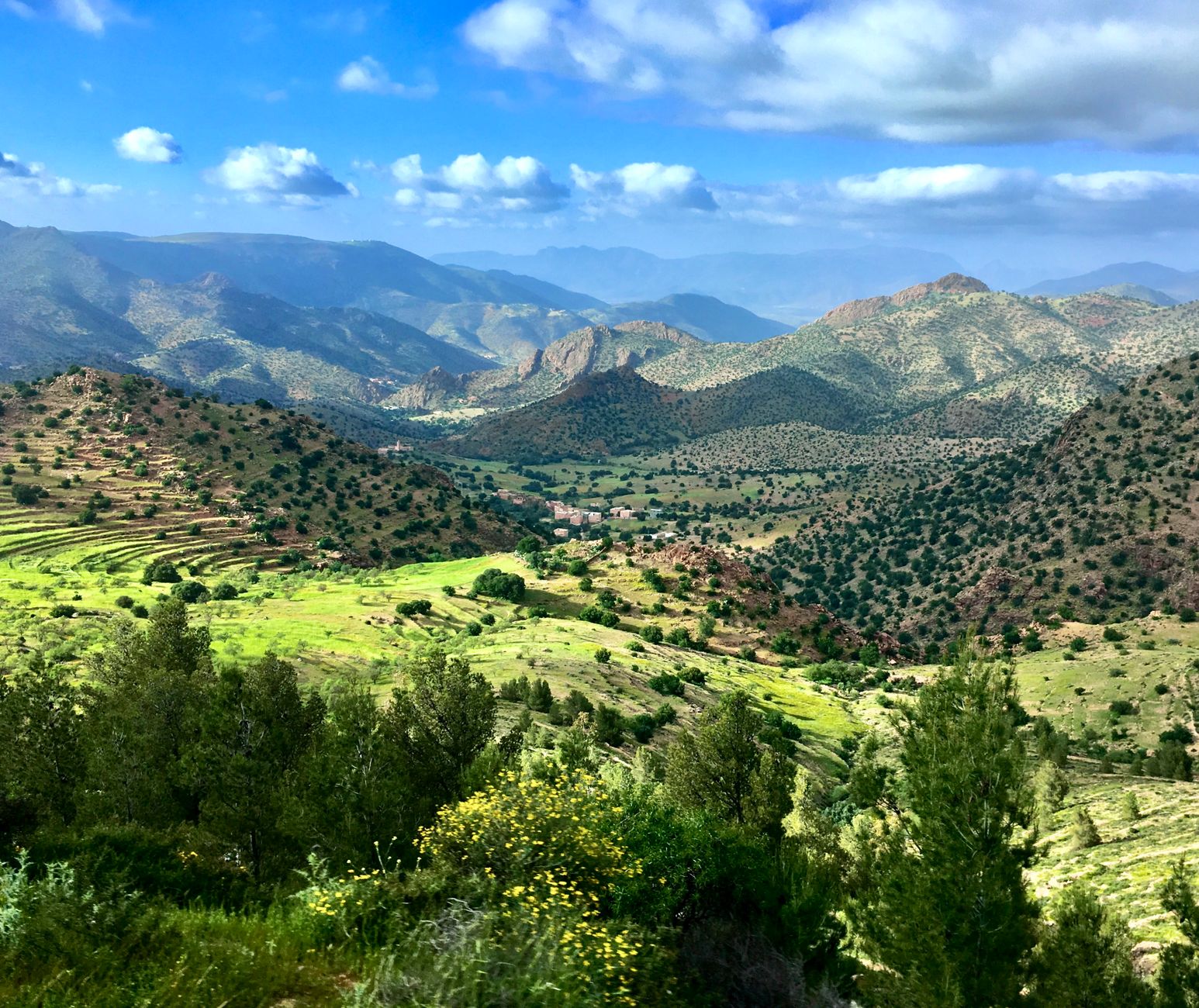
Day 6: Return toward the coast via the Ameln Valley, stopping at the painted rocks and a roadside argan press where the smell of roasted kernels follows you back to the car.
Day 7: Rest day in Agadir or Mirleft: beach time, a hammam scrub that takes off a layer of skin you didn’t know you had, and a slow seafood dinner.
Day 8: Explore the Oued Souss estuary south of Agadir — another key birding site — then the surf town of Taghazout for sunset over the water.
Day 9: Day trip to Paradise Valley in the Ida Outanane mountains: swimming in rock pools and a short canyon walk. Go early; by noon the tour buses arrive.
Days 10-11: Two nights near Mirleft or Sidi Ifni. Coastal walks, Legzira’s red arches (go at low tide), and a morning with a fishing crew at the port — watch them mend nets, then buy your lunch straight off the boat.
Day 12: Transfer back to Agadir for departure. Leave a little room in your bag for argan oil and a little room in your schedule for one last corniche walk.
Where to Stay
Accommodation here runs from simple guesthouses in fishing villages to comfortable eco-lodges and coastal hotels. Book early in spring, when the birders arrive and the good rooms vanish. I’ve slept in most of these price brackets, and the mid-range eco-lodges near Oued Massa are worth every dirham.
| Option | Area | Vibe | Price per night (MAD & EUR) |
|---|---|---|---|
| Beach hotel | Agadir | Modern, convenient base | from 500-900 MAD (~EUR 45-80) |
| Eco-lodge | Oued Massa | Quiet, nature-focused | from 600-1,000 MAD (~EUR 55-90) |
| Village guesthouse | Tafraoute | Amazigh hospitality, simple | from 300-550 MAD (~EUR 27-50) |
| Surf guesthouse | Mirleft or Taghazout | Relaxed, ocean views | from 400-800 MAD (~EUR 35-70) |
Getting There & Around
Agadir is your gateway. A rental car gives the most freedom for the park and the Anti-Atlas, but shared grands taxis and buses cover the main towns perfectly well if you’re happy to go at their pace.
| Route | Best option | Duration | Approx cost (MAD) |
|---|---|---|---|
| Marrakech to Agadir | Bus (CTM or Supratours) | 3.5-4 hrs | 100-150 |
| Casablanca to Agadir | Domestic flight | 1 hr 15 min | 400-900 |
| Agadir to Tiznit | Grand taxi or bus | 1.5 hrs | 50-80 |
| Car rental (Agadir airport) | Self-drive | Per day | 250-450 |
Budget Estimate
Here’s the honest version, from someone who has overspent in Morocco and learned better. Figures are per person and assume mid-range choices — sharing a room lowers costs noticeably, as you’d expect. Park guiding fees are worth every dirham; a good guide turns a walk into a story. And keep a little cash aside for the unplanned: the argan oil you’ll want to bring home, the extra hammam, the seafood lunch that turns into an afternoon.
| Item | Solo (MAD / EUR) | Couple per person (MAD / EUR) |
|---|---|---|
| Accommodation | 4,800-7,200 / ~430-650 | 3,000-4,800 / ~270-430 |
| Food & drink | 2,400-3,600 / ~215-325 | 2,100-3,000 / ~190-270 |
| Getting around | 2,500-4,000 / ~225-360 | 1,500-2,500 / ~135-225 |
| Activities & tours | 1,800-3,000 / ~160-270 | 1,800-3,000 / ~160-270 |
| Total | 11,500-17,800 / ~1,030-1,600 | 8,400-13,300 / ~755-1,195 |
Book Your Stay on MoroccanChapter
Your Souss-Massa journey deserves stays chosen with care, not guesswork. On moroccanchapter.com you’ll find handpicked guesthouses, eco-lodges and coastal retreats across the region, each reviewed by people who have actually slept there — including a few I’ve returned to myself. Whether you want a bird-filled estuary hideaway or a surf-side room near the ocean, browse the listings, compare honest prices, and reserve your base before the spring season fills up. Start planning your deep immersion today, and let the wild coast do the rest.